
WOOL IS OFTEN MORE THAN JUST A HAIRCUT
Why the wool we choose matters
Wool has a beautiful reputation. It brings to mind green pastures, contented sheep and a simple haircut that grows back every year.
The reality is more complicated.
Like every material we produce and use, wool leaves a footprint. Being natural and renewable does not automatically make it sustainable—and it certainly does not guarantee that animals, people and landscapes have been treated responsibly.
That is why we believe wool should not be praised without also asking where it comes from and how it was produced.
Why we still value wool
Wool is an extraordinary fibre. It is breathable and hygroscopic, which means it can absorb moisture from the air and from the skin. It provides excellent insulation and helps maintain a comfortable temperature.
It is also naturally resistant to odours and flames, as well as durable and elastic. These qualities make it particularly suitable for slippers: warm without feeling stuffy, comfortable in changing temperatures and resilient enough for everyday use.
When treated thoughtfully, wool can also biodegrade under appropriate conditions. But its natural origin is only one part of the story.
The uncomfortable side of wool
Sheep farming and wool processing can affect the climate, soil, biodiversity and water. Sheep produce methane, grazing can place pressure on land when poorly managed, and conventional cleaning, dyeing and finishing may require considerable amounts of water, energy and chemicals.
There are also important questions about animal welfare.
One of the most disturbing practices associated with wool production is mulesing. It involves removing folds of skin from around a young lamb’s breech to reduce the risk of flystrike. The procedure can cause considerable pain and suffering, particularly when performed without adequate pain relief.
Mulesing is not an inevitable part of producing wool. Alternatives exist, and choosing wool from verified mulesing-free farms helps support their wider adoption.
So, no: wool is not always “just a haircut”.
Our choice: undyed Kingwooly
Our felt collection includes felt made from recycled plastic bottles, felt made partly from discarded woollen garments, and felt made from pure wool.
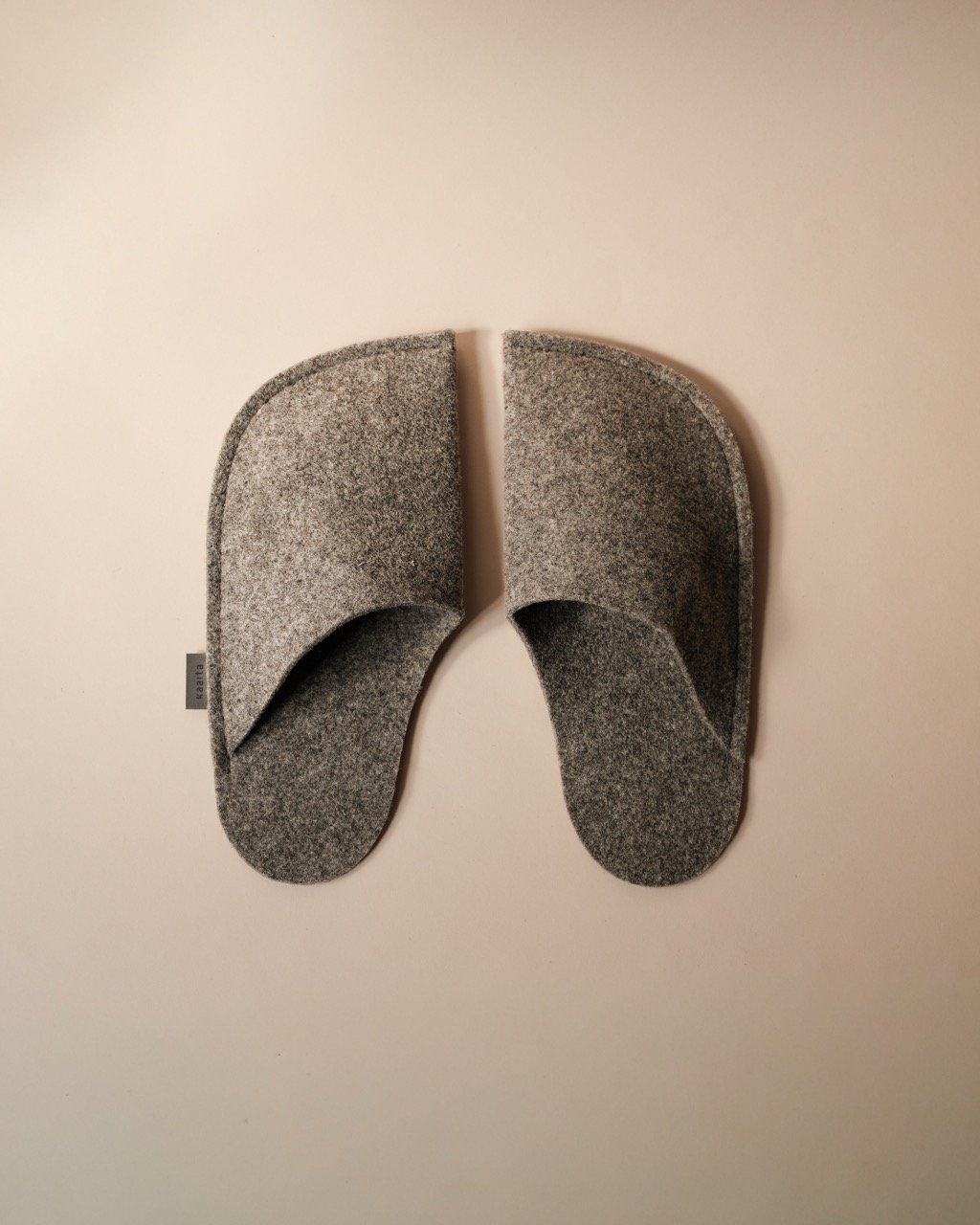
For our pure-wool option, we chose undyed Kingwooly felt from Lanificio Bigagli in Prato, Italy.
Kingwooly is made from 100% virgin wool and is guaranteed mulesing-free. The material selected for our slippers has a traceable, RWS-certified origin.
The Responsible Wool Standard does not claim that wool has no impact. It provides independent criteria for better practices. Certified farms are assessed in areas including animal welfare, land management, workers’ wellbeing and safety. A documented chain of custody follows the certified wool through the supply chain.
For us, traceability matters. It turns a vague promise into something that can be checked.
The colour belongs to the sheep
Our Kingwooly felt is not dyed.
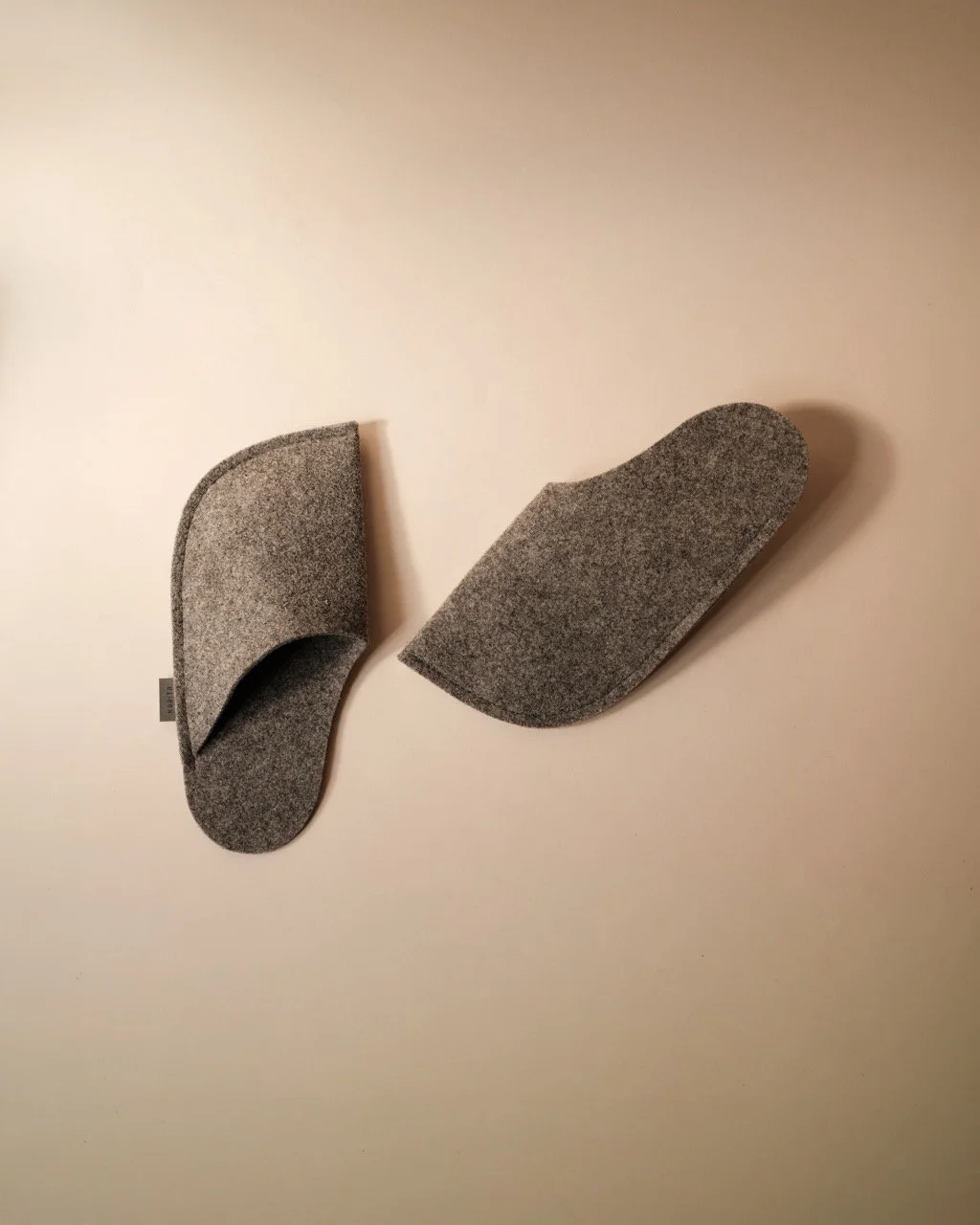
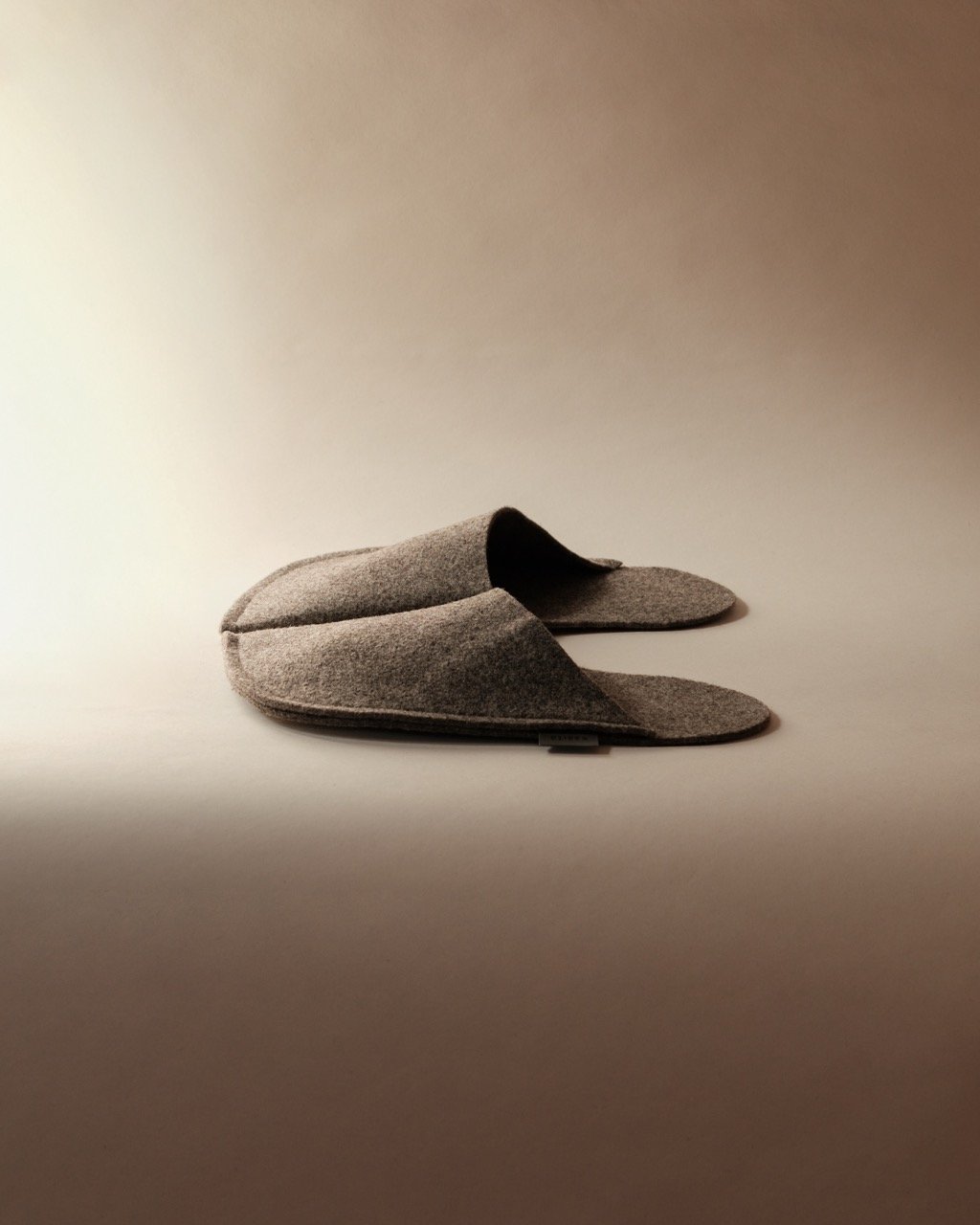
Its warm brown colour comes directly from the fleece. Wools in naturally occurring shades are selected and combined, rather than coloured to imitate something nature has already created beautifully.
Avoiding dyeing means no dyes or water are needed to create the colour. Bigagli’s dry-needling process also avoids a water-processing stage when the fibres are transformed into strong, elastic felt.
The result is a pure, undyed wool felt that retains wool’s natural character and is biodegradable under suitable conditions.
The felt is biodegradable. The entire slipper is not—yet.
We believe it is important to distinguish between the material and the finished product.
The wool felt itself is biodegradable under suitable conditions. Our finished slipper, however, is not yet fully biodegradable. It also contains a textile label and sewing thread, and some models feature a non-slip print. These components are currently not biodegradable.
We are already working towards replacing the thread and label with biodegradable alternatives. The non-slip print remains another challenge to solve.
We are not there yet, and we do not want to pretend otherwise. Progress often happens one component at a time.
A better choice, not a perfect one
We do not describe any new material as impact-free. Virgin wool still requires animals, land and resources. Recycled wool and recycled polyester have their own advantages and compromises too.
There is no single perfect material for every purpose.
What we can do is understand those compromises, choose responsibly within them and share what we know. In this case, that means selecting wool with traceable origins, verified welfare and land-management requirements, no mulesing and no added colour.
It also means being honest about what we have already improved—and what still needs work.
Some materials do not need much intervention.
Pure wool felt. Undyed. Naturally brown. Straight from the flock—and chosen with care.